
Subscribe

Your email:
Untitled Document

Topics

Links

Untitled Document

Current Articles | RSS Feed RSS Feed

Suzuki Teacher Training at Stevens Point: Part 3


Teaching violin

We're grateful to have Lucy Lewis, a trained Suzuki teacher and doctoral student in musical arts at the University of Iowa, share a series of blogs about her experiences at American Suzuki Institute at the University of Wisconsin-Stevens Point. Every summer, the Suzuki Institute hosts a teacher training session at Stevens Point, and this summer Ms. Lewis was one of the teachers-in-training. This entry is Ms. Lewis's third and last about her training at Stevens Point, and we'll certainly miss having such a thoughtful and wise voice as Ms. Lewis's on our blog. Ms. Lewis shares quite a few insights from her teacher training, but we were particularly drawn to this gem: if we have a sincere love for our students and our goal as teachers is to develop their character and musicianship, we also need to tend to ourselves by "recharging and reconnecting with colleagues." Simply put, we can give more to our students when we persist in our lifelong development as teachers. please leave a comment below thanking Lucy for her blogs or send her an email at lucy-lewis@uiowa.edu

Why Own an Instrument Stand for Your Violin, Viola, or Cello?


Alberta Barnes

Pretty much every musician has a music stand, but not every musician has an instrument stand. Have you thought about the benefits to owing a violin stand or a cello stand? Here are four things to think about!

1. Motivation to Practice. Having the instrument out on an instrument stand can be a great way to motivate yourself (or kids, especially!) to practice. It can be irritating to have to open the case and get everything set up correctly, but when the instrument is immediately accessible it is also that much more motivating to play it.

2. Time Saver. If you have to squeeze in practice time between the million other things inyour day then taking your instrument out and packing it up again can waste valuable practice time! With the instrument safely out of its case, you can move away from and return to your instrument to practice without fumbling with shoulder rests or endpins for those valuable minutes.

3. Useful at Gigs. 
Bringing a violin stand or a cello stand to your gig with you can prove veryuseful. A violin stand is a must-have if you switch between instruments at gigs. Or, if you are playing only the one instrument, it can be a much more secure way to hold the instrument during breaks than simply perching your violin on your chair.

4. A Way to Display Your Instrument. When used at home, the cello stand can be a beautiful way to safely display your treasure. It thereby enhances the ambience of the room much more than leaving it in the case would!

If you’re looking for a violin stand, we have several options: 


Three Ways to Improve Musicianship Outside the Classroom


christian howes

Christian Howes shares a terrific new blog entry with his top three ways to keep practicing when you're not in the practice room. Leave a comment below with your own "downtime" practice tips!  

Good musicians practice.

Great musicians practice better. And they gain an extra edge by using their time wisely outside the practice room.


Getting the Most Out of Your Bow


Violin Bow

Today we have another fine blog from our apprentice James Engman. James shares six tips that will help you maintain and care for your bow whether you're just starting out or an established professional. 

As a young player becomes more experienced, their technical ability
may begin to require a higher quality bow. The balance, weight, flexibility, and setup of a decent bow will allow a student to accelerate their formation of technique and tone. Just as a sharpshooter can’t perfect his or her aim with an old black-powder musket, a violinist can be held back by an inferior bow. However, the cost of a good bow can often seem unusually steep to first time buyers. It is easy to forget that the instrument in your right hand is just as much of an investment as the one in your left, and it requires just as much care, if not more. Therefore, a student should learn to care for their bow as it were a $90,000 Peccatte from the first time they pick one up. Here are six simple tips, for students and professionals alike, to get the most out of your bow.

1. Rosin the Bow!
Although a strand of horsehair appears smooth, it is actually covered in tiny scales and hairs. Not only does your rosin help the bow stick to the string, but it also protects its texture. Bowing without enough rosin or rosining a small area with too much pressure and frequency can smooth out the hair and ruin it. So, it is always important to keep the hair evenly rosined.


Fresh hair is most easily rosined with powdered rosin, but a cake of rosin can do just as well.To allow a cake of rosin to work better, scratch the surface with a dime in a cross-hatched pattern until it looks etched. Rosin new hair from frog to tip with an extra short motion over the six inches at each end, where rosin doesn’t stick as well. After about 15-20 strokes, test it on the strings. It should leave a white mark on the string, and grip along the whole length of the bow without being too “sticky”. After the first time rosining the bow, it is recommended to apply 6 strokes of rosin before each playing session, with a couple extra in the area where the bow has been played the most.

*Pro-tip*: When using a round cake of rosin, continuously rotate it as you rosin to prevent grooves from forming.


2. Maintain and Adjust Tension Properly!
Adjusting the tension of the bow is a skill to be perfected! When turning the screw with your right hand, hold the frog between your left thumb and first and second fingers. Do NOT hold the bow by the stick. Failure to hold by the frog can cause the eyelet to wear away at the inside of the stick, causing a “wobbly frog”, and can also strip the threads of the screw and eyelet, rendering the bow useless.

A bow should only be brought up to the tension needed to play at. It should always maintain curvature toward the hair, and never be straight or concave. Finding the ideal tension for each style of playing may take some experimentation. Once it is found, note the distance between the stick and hair, and the amount of pressure needed to touch the hair to the stick at the center. Most players prefer for there still to be a small space when playing fortissimo, but others like less tension.

When putting the bow back in the case, loosen the screw all the way without removing it (again, holding at the frog). The hair should be floppy and relaxed. If the hair is not slack when it is fully loosened, it may need to be rehaired. By loosening the hair, you are preventing warping. Warping ruins bows!

3. Thou Shalt Not Play with a Balding Bow!
Every player looses a few hairs now and then, but as soon as there is a significant amount of hair loss from one side of the bow, stop playing, and get it rehaired! Tightening a bow with lop-sided hair for a significant amount of time can warp the bow, and a $60 rehair is cheaper than a $600 bow. A good rule of thumb is to get your bow re-haired when the wooden plug under the hair at the tip of the bow begins to show, though some would say that is too much loss already. Professional players and serious students might rehair their bow twice a year or more, but for young students, a bow can usually go 12-18 months before a rehair is necessary.

4. Don’t Tilt the Stick of the Bow When Playing Forte!
Many students are taught to tilt the stick of the bow away from themselves as proper bow technique. While this is okay for soft playing, the stick should always be directly above the hair when applying pressure (playing forte). Using a vertical bow-stick not only produces more sound, but is healthy for the bow. Applying pressure with a tilted bow will cause warping over time. Also, the stick might drag across the strings, wearing off the varnish and exposing the wood. Not only is this visually unattractive, but it leaves the wood on one side vulnerable to moisture in the air, causing it to expand and warp even further. This is a habit that must be constantly checked when playing.

5. No Bow Waving, Stand Tapping, Sword-Fighting, or Shenanigans!
It is a common practice among young orchestras to applaud soloists and conductors by tapping the bow on their stands or waving the bow in the air. This is dangerous for your bow. Hitting the bow against something can cause small fractures at the tip of the bow which could eventually split, destroying the bow. A better option is to set down your instrument and clap, or stomp your feet on the ground. Also, do not challenge your stand-partner to any duels.

6. Wipe Rosin Dust Off of the Stick After Playing.
Rosin dust can build up on the stick of the bow over time. By wiping the stick with a cloth after each session, you can prevent build-up which is difficult to remove. If build-up does occur, first try using a rag dampened with distilled water (being sure to keep the hair dry). If this is not a enough, a mild cleaner or alcohol is usually okay for most bow varnishes, but not recommended for the violin itself. If varnish is ever removed or worn off, have a skilled bow repairer put more on.

With these six steps, you should be able to make any bow last a lifetime and more!


A Violinist Plays Ugly


Christian Tetzlaff

I'm not sure how many of you all out there read Jeremy Eichler's profile in The New Yorker on the German violinist Christian Tetzloff. If you have, good on you. If you haven't, you should pick up a copy soon. Most likely the article – and Tetzlaff's approach to music – will challenge your notion of how a violin should sound. However, it's an exciting and important challenge, no matter what you decide about Tetzlaff. Tetzlaff is an well-respected soloist, but he's not a soloist who's found success and recognition by being flamboyant, a crowd-pleaser, or a crossover star. Rather, his success comes from his ability to play "an unusally wide range of tones, from the refined to wild" (Eichler). To put not too fine a point on it, Tetzlaff even once told a a group of students, "Beauty is the enemy of expression!"

Even though many fellow musicians admire Tetzlaff, critics have occassionally been impatient with his playing. This is, of course, because Tetzlaff is upsetting the conventions of the instrument. If Tetzlaff wants to include harsher sounds in his playing, it comes with a price: beauty, and perhaps the ire of listeners who expect the Romantic composers to be played a certain way:

Most important, he [Tetzlaff] refuses to embrace what might be called the School of the Big Tone: the broad, velvety sound, sustained with uniformly wide vibrato, that many listeners in the age of Izhak Perlman have come to think is how a violin should sound. Tetzlaff's palette extends to harsh or crushed tones, even to sounds that he has purposefully leached of color. And older French musician of my aquaitance dislikes Tetzlaff's playing precisely because such ugliness is allowed in the door.

Rather than exhaust Eichler's article, I want to end to send you toward it with a hint of its praise for Tetzlaff. As Eichler demonstrates, audiences do respond to Tetzlaff. Eichler ends the essay with a description of Tetzlaff playing a Bach concert in a medium-sized church (and only two-thirds full) in Dresden. Eichler expresses a quiet but intense admiration for Tetzlaff's playing, and he senses that most of the concertgoers feel the same way as him: 

A marathon Bach recital could easily try the endurance of people seated in hard pews, but the concertgoers in Dresden sat in rapt silence. I attributed this to a distinctive aspect of Tetzlaff's charisma. Onstage, many violin soloists adopt a confident swagger, but in Dresden Tetzlaff, as whenever he plays Bach, seemed to expose layer after layer of vulnerability, creating an atmosphere of naked confession.

I'm squirming a little bit in my seat as I write this, but I can't imagine a better concert. Beauty is only one register of expression, and it's a shame that artists often stay there too long. I can imagine other responses to Tetzlaff though. What do you all think? How central is beauty to your playing? How important is a wide range of expression?  


An Invitation to O'Connor Method Alumni From the Ann Arbor Workshop


Val

Today's guest blog is from Val Jaskiewicz, the Vice President of Merchandising at SHAR Music. Val has been a tireless champion of alternative styles here at SHAR and was instrumental in bringing Mark O'Connor and Pam Wiley to Ann Arbor for a teacher training workshop in August. Below, Val expresses his heartfelt thanks to everyone who participated and invites the workshop participants to share questions, reactions, and ideas about the teacher training session in the comments section. 

Just one week has gone by since we all met at the Mark O'Connor workshop, and I have heard from so many of you about how much you learned and your eagerness to apply it. Thank you, Pam Wiley, for your masterful and enthusiastic presentation of Mark O'Connor's rapidly growing method, and for showing us how to teach concepts that are not familiar to most of us. Thanks, also, to the Ann Arbor School for the Performing Arts, who partnered with SHAR to bring this worthwhile event to Ann Arbor. And of course, we'll never forget Mark O'Connor and Melissa Tong's brilliant performance at the Ark Saturday, alongside the great Saline Fiddlers! It was indeed a memorable weekend. I highly recommend you read  James Engman's blog about the event. James was one of the teacher attendees, and is SHAR's newest apprentice. I believe he has brilliantly captured the essence of what Mark O'Connor is doing through his method.

The intent of this blog is to create an opportunity to connect with each other and share ideas about using the O'Connor Method in your studios and classrooms. Fifteen hours of classroom training in the method is a lot of training, but there are always things that come up that you wish you may have asked, usually right after leaving for home! There was definitely a lot of enthusiasm at the workshop and I want to be sure that we can keep the momentum going.

Please jump in with your comments and experiences! This blog is open for all to see, but we'd like to invite the attendees of the August 24-26 workshop at the Ann Arbor School for the Performing Arts O'Connor to participate in this particular conversation. If you did not attend the teacher training session but still want to contribute, SHAR welcomes you to propose a guest blog, which you can send to our blog editor Joe Chapman at this address: joec@sharmusic.com.


Mark O’Connor Has a Dream for American Violinists


Mark O'Connor

We'd like to welcome our newest SHAR Apprentice James Engman to the SHAR Music Blog! James studied violin performance, physics, and math at the University of Wisconsin in Madison, and he hopes to use his degrees to excel in instrument repair. What we love about James's first blog is that his enthusiasm is so catching: his experience at the Mark O'Connor Teacher Training Workshop clearly affected him a great deal, and you can sense the transfer of enthusiasm from Mark to James and then to yourself as a reader. And isn't that how most of us got into the arts anyways? We heard or saw or read something amazing by another artist, and we thought: "I want to do that too."

If you know just a little about Mark O’Connor, you might describe him as “the world’s greatest fiddle player.” And while that title is apt, I would go even further. As someone who has followed Mark O’Connor’s career closely, I would describe him as “America’s virtuoso musician.” And I'm not be using the term "virtuoso" in the modern sense of a highly technically skilled performer (even though that would also be accurate). Rather, I'm excavating an older use of the term. In J.S. Bach’s time, a virtuoso was a musician who explored all the realms of musicianship and was accomplished in performing, composing, arranging, teaching, and who also studied theory, history, and philosophy.

I'm getting ahead of myself, though. When I heard Mark O'Connor speak this weekend at a teacher training workshop in Ann Arbor, I realized how genuine and deep an artist's dedication can be. He recalled being eight years old and, having seen Cajun fiddler Doug Kershaw play “Diggy Liggy Lo” on The Johnny Cash Show, he begged his parents for three years to buy him a violin. It is that young, unbridled enthusiasm – a child's determination to play like Doug Kershaw – that drives Mark O’Connor and his followers. Likewise, his method nurtures this enthusiasm, and it produces well-rounded, creative string players who, above all, love making music. Being a virtuoso is all well and good, but this passion – and a drive to unlock this passion in others – is also an important part of Mark's method. 

It's true that this weekend I was certified in the Mark O’Connor Violin Method, which is a relatively new method for learning to play the violin (there are other, similar methods for viola, cello, or bass). But it's also true that I had low expectations when I arrived. I had been classically trained and had little fiddling experience and I knew Mark was primarily known as a fiddler. What I discovered, though, is that Mark’s method has a vast range of styles and is steeped with every aspect of American music. By the end of the weekend, I had been fully convinced by the passion behind the method and by the method itself. I’m unable to put my finger on any one reason that sold me on Mark’s vision: there are just too many. I can say that I see this method as a revolution in early string development, one that could produce fantastic violinists who can adapt to many styles and who possess the artistic creativity needed in today’s musical world.


Learning Jazz Violin? A Drummer Is a Jazz Violinist's Best Friend


Christian Howes

Today's guest blog is from teacher and violinist Christian Howes. Mr. Howes shares some great advice for musicians: make friends with someone who, through their background or training or experience, has something to teach you. Often we gravitate toward folks who play like us, but Mr. Howes suggests that seeking out different musical traditions challenges us and makes us less insular musicians. It's certainly an inspiring blog, but at the very least don't miss the video of the jam session below!

Think about your best friends.

Chances are they are very different from you. Your relationships bring out those differences. Like mirrors, they show you for all the good and bad, helping you grow.


A Silent Violin?


Violin Practice

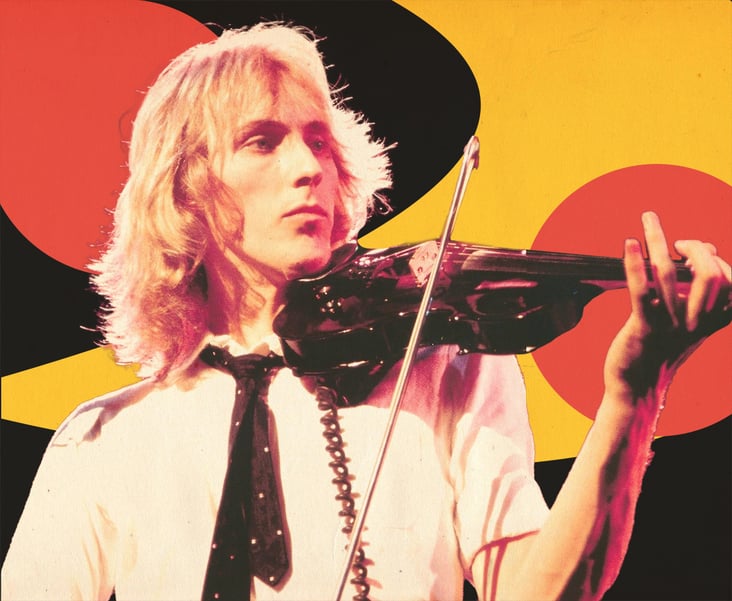
Aren’t violins made to be heard? Why would you want a silent one, then? Well, silent violins have several advantages (besides just being fun to play!). Here are some thoughts!

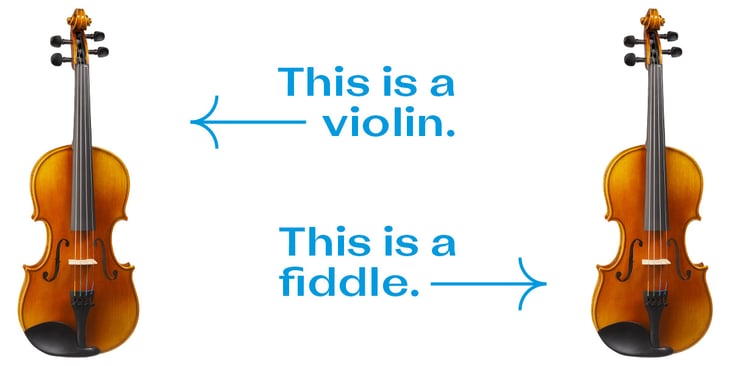
What Is the Difference Between a Violin and a Fiddle?


Alberta Barnes

With Mark O'Connor's workshop and concert in Ann Arbor fast approaching, we thought we'd share a quick blog post that answers the most timeless question of them all: What exactly is the difference between a violin and a fiddle?

All Posts