
Subscribe

Your email:
Untitled Document

Topics

Links

Untitled Document

Current Articles | RSS Feed RSS Feed

Violin Bridges: The Details Matter


Violin

Many of us don’t pay very much attention to our bridges unless they fall down, go askew, or break. But do we realize how important the violin bridge is to the setup of the instrument and how much its position can affect our sound? Here are some notes on violin bridges to help keep you informed and sounding your best.

The Purpose of Your Bridge
First of all, the violin bridge suspends the strings above the instrument in their proper playing position. The height and shape of the bridge are thereby very important for the setup of the instrument. Secondly, the violin bridge conveys the vibrations from the strings into the body of the instrument. A string vibrating by itself doesn’t produce very much volume, but “plugged in” to the resonating chamber of the violin through the bridge its sound becomes so powerful that it can potentially be heard over an entire orchestra.

The violin bridge is strategically positioned so that the foot on its G-string side sits directly above the bass bar, which extends nearly down the length of the strings and conveys the vibrations through a greater area of the top of the instrument. The E-string side of the bridge, meanwhile, sits closely above the sound post. The sound post acts both as a pivot for the bridge’s vibrations as well as a means of conveying the vibrations to the back of the instrument.

What About Setup?
The shape and placement of the violin bridge are critical for maximizing the instrument’s potential.

  • The bridge feet should be centered on the f-hole notches.
  • The crown (top) of the bridge should be the same shape as that of the fingerboard. This produces a consistent string height for all four strings.
  • The feet must be completely flush with the face of the instrument. If they aren’t, then not all of the string vibrations are being conveyed into the instrument and the sound quality is definitely suffering.
  • The side of the bridge closest to the tailpiece needs to be perpendicular with the face of the instrument. 

Do Some Damage Control, But Only Some
The violinist should be able to fix some common bridge problems on their own with reference
to the above setup specifications. However, here are some situations where you will definitely need professional help:

  • If the bridge is warped then it will need to be replaced. A warped bridge is not only inhibiting the sound of the instrument, but it is also at risk of breaking.
  • If the strings have worn deeply into the crown of the bridge then the bridge needs to be replaced. Typically about 75% of the string should be sitting above the bridge rather than inside the notch. If it sits any further into the bridge then it is being muffled.
  • If the bridge has fallen down completely and the soundpost is rolling around inside the violin, do NOT attempt to fix this yourself. The soundpost needs to be reset by a professional. Without the support of the soundpost, the face of the instrument is not able to withstand the forty pounds of pressure that the strings exert on the violin through the bridge! 

It is very important to be continually aware of your bridge placement. Slight changes in humidity, temperature, or even changing your strings can cause the bridge to go askew. Simple observation and maintenance will ensure that your bridge will have a long lifespan and that your instrument will be sounding its best. 


What Should You Look For In a Case?


Violin Case

If you just bought an instrument for the first time, or if you're looking to upgrade your current case, check out our purchasing guide below. It takes you through the major features you should consider such as shape, exterior and interior materials, and construction. As always, feel free to contact our knowledgeable customer service team at 1.800.7427 if you have any questions. 

One of the most important accessories you can purchase for a stringed instrument is a case. Many student or intermediate violins, violas, cellos, and basses can be purchased as part of an outfit that includes a case that is usually consistent with the quality of the instrument; these cases generally offer very adequate protection and durability at an economical price. If, however, you want to replace or upgrade the case you already have, or you need a case for a new instrument, there are a few things you should consider.

Shape
Perhaps the first factor to consider is the case shape that'll work best for you. Cases come in a few varieties: oblong, shaped, and dart-style. Shaped or dart cases are usually very lightweight; these are often the cases that beginners and students choose. They're usually available in fractional sizes and are easy on the wallet.

Oblong cases, sometimes called rectangular cases, afford more room for accessories and are usually preferred by intermediate and advanced players. Although shaped cases tend to be lighter and easier to carry, you do have more room for accessories with an oblong case. And if you're really looking for a roomy and light oblong case, we do list the weight of most of our cases. Maybe that extra pound is worth the space!

Exterior Materials and Features
The great majority of today's modern cases are covered with a heavy-duty nylon canvas material. This lightweight material is scratch and tear resistant and provides decent protection against the elements. In addition, SHAR also carries a wide range of cases made with other other exterior materials: Cordura, suede fabric, leather, 3-ply composite, Conatex, polyamid fabric, fiberglass, thermoplastic, pebble grain vinyl, pebble grain mat-finish resin, and reinforced ABS. Each of these materials has its own unique qualities and characteristics that should be considered when making your case selection. 

Shaped cases usually include an exterior accessory pocket and sometimes backpack straps. Oblong cases quite often will have a full length music pocket which may include an accessory organizer, a subway strap end handle (for vertical carrying) and an adjustable shoulder strap.

Closure or latch mechanisms vary depending on the case, but it should be noted that oblong cases often have dual zippers and weather flaps to protect the zippers from rain and snow.

An important note about cello cases – some cello cases come with built-in wheels and you should decide whether this is an important feature for you: they can be handy in airports. Some cello cases include detachable backstraps, which is another clever way to lug around your instrument. If you're not looking for the heavy-duty protection most cases offer, SHAR also sells padded cello bags. These are similar to bass bags but include backstraps.

Construction
The type (or types) of material used in the skeletal, or hidden, construction of the case directly affects the weight of the case as well as the durability and protection the case provides. SHAR offers a variety of cases, and while some use more traditional construction, others use advanced materials that are both lightweight and strong.

Commonly used shell materials include foam, styrofoam, cellular foam, waterproof polymid foam, plywood, styrofoam reinforced plywood, laminated wood, injected/molded foam, foam/plywood combination, and in some cello cases an AIRTEX cellular skeleton.

Interior Materials and Features
Instrument case interiors can range from simple and functional to sumptuous and luxurious. Whatever your selection may be, it's important that your instrument fit securely in the case. This is generally not a problem since most instruments and cases are standard sizes; however, if your violin, viola, cello or base has atypical dimensions, it's probably a good idea to talk about your case options with a SHAR representative.

Most violin, viola, and cello cases carried by SHAR have Velcro neck restraints; a properly secured neck strap will protect the neck of the instrument and reduce movement during transit.

A French fit or semi-French fit case has an interior instrument compartment that follows the closely follows the contours of your instrument for a tight fit. Most cases, however, have a universally designed "instrument well" that very adequately secures the instrument.

Violin and viola cases are often described as being suspension or non-suspension cases. Suspension cushioned cases have a raised shelf (or shelves) that suspends the back of the instrument approximately an inch over the bottom of the case. This can provide added protection and is often recommended for violins and violas with delicate varnish. SHAR does carry a line of non-suspension cases that feature an injected foam cushion molded to the shape of the instrument. These cases have a snug fit that holds the instrument securely in place and also helps protect it from temperature changes. Case lining and instrument blanket materials include silk-plush, cotton velvet, suede and brush nylon-tricot.

Additional case features may include between two and four bow spinners (or holders), accessory compartments, hygrometers for humidity level monitoring, string storage tubes, and vapor bottles for increasing case humidity.

Please call our expert customer representatives at 1.800.248.7427 if you have any questions!


Easy Violin Sheet Music


easy violin sheet music

After you’ve been playing the violin for a couple of years, it starts to get tiresome when you feel limited to the scales, etudes, and few solos that your teacher gives you. If you’re a beginning to intermediate player who’s looking to build up a repertoire beyond the songs in the Suzuki books, here are some sheet music suggestions for you.


Miniature Masterpieces, arr. by W. Ambrosio (1920 305).
This collection of 21 violin pieces – all in first position! – includes works by popular composers such as Saint-Saens and Wagner.


First Solos from the Classics by S. Applebaum (1851 010). Everything is in 1st position. Thebook includes famous melodies from an assortment of classical eras, all arranged for violin and piano.


Fun With Solos
 by Evelyn Avsharian (A70).
 Everything in this book stays in 1st and 3rdposition and is a source of fun and exciting recital repertoire.


Violin Favorites
 by Juchem/ Brochausen (1846 107).
 This collection of twelve violin piecestouches on great composers such as Bach, Mozart, and Dvorak.


Easy Classics for Violin
by Peter Spitzer (1872 042).
Here you will find popular classical melodies (such as “Ode to Joy” and “Can Can”) arranged simply for one or two violins.


First Solo Album by Harvey Whistler (1885 016). This collection of eleven short pieces for violin and piano keeps the violinist in first position and is great to use for recital repertoire.


This only begins to touch on the tremendously wide range of violin sheet music that we carry at SHAR! If you’re looking for something specific or you need more suggestions, please give us a call at 1.800.248.7427 – we are happy to talk with you!


Shopping For Your Next Violin


Violinist

As an advancing player, you outgrow your starter violin at a certain point: your skill level is inhibited by the instrument you own (or rent) and the limitations of your instrument prevent full musical expression. So where do you begin your search? Ideally, you want to try out a few violins and see how the instrument responds to your playing style. However, due to high overhead costs local violin shops might not have a superior instrument within your budget, or a wide enough range of violins for you to try out. That's where SHAR can help. We have an In-Home Trial program that's easy to use and that allows you to try out a number of our instruments in your practice room at home. But to help you even further, we've also begun a recording and video project focused on some of our best-selling violins; hopefully, with our instrument demonstrations, you can get an introduction to these violins, especially their tone and projection, and perhaps even pick out a few you want to try. Enoy, and please do call our fine instrument consultants at 866.742.7270 if you have any questions!

Carlo Lamberti Sonata (for more info click here)


Carlo Lamberti Classic
(for more info click here)


Carlo Lamberti Master Series (for more info click here)


John Cheng Stradivari Model (for more info click here)


John Cheng "King Joseph" Guarneri del Gesu (for more info click here)


John Cheng Limited Edition (for more info click here


Student Violins for Sale: A Guide


student violin

If you or your child is just starting out on the violin: congratulations! Welcome to the string community! If you’re looking for your first instrument, though, things can be confusing. Trying to find the best violin can be a bewildering path to take. Here are some guidelines that should help you along your journey!

When you’re purchasing a violin for the first time, here are a few things to look for: 

  • Pegs: do they turn easily without slipping or sticking? If the instrument has pegs that keep slipping then it will be very difficult for the new violinist to attempt to play in tune.
  • Fingerboard: is it real ebony or is it some other type of wood that’s been painted black? Violin makers have used ebony fittings for years because of the wood’s hardness, so if the fingerboard isn’t really ebony then it is much more likely to warp, crack, or splinter.
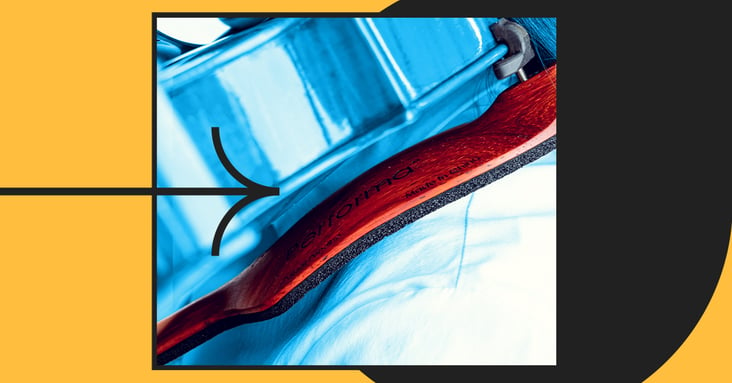
  • Bridge: Is it the correct height? Too low and the strings will vibrate against the fingerboard; too high and the violin will be hard to play. Do the feet sit flush against the top of the instrument? If not, then the instrument’s potential is not being met. The bridge conveys the vibrations of the strings into the face of the violin, so if it’s not making contact with the wood then the vibrations are being lost.
  • Purfling: Is it real ebony inlaid into the wood or is it just painted on? The purfling is inlaid around the edges of the instrument in order to protect the wood from cracking. If the instrument doesn’t have this inlay, then any sort of damage sustained to the edges of the violin is likely to spread into the face of the instrument, rendering it unplayable.
  • Wood: The top of a violin needs to be spruce and the back of it is almost always maple. The wood also needs to be properly aged; if it is varnished before the wood has aged properly then it is at risk of cracking or warping.
  • Fine Tuners: Do they turn easily? Are they digging into the face of the instrument beneath the tailpiece?

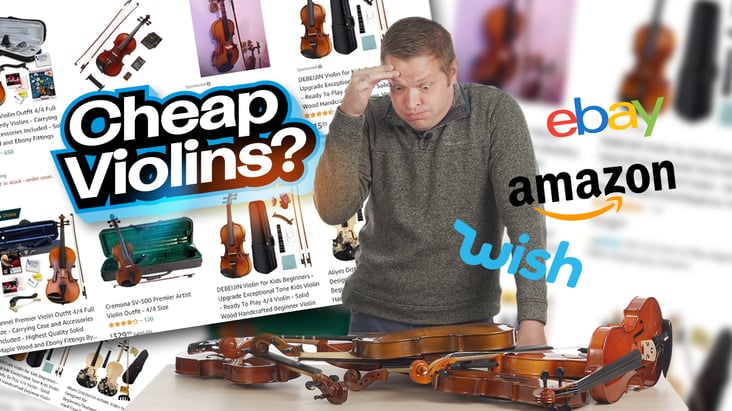
These are just a few things to look for. More often than not, if you purchase a violin from ebay or craigslist, it probably won’t fit the bill. These instruments are what we like to call VSO’s (“Violin Shaped Objects”). The good news is that all of our student instruments at SHAR are inspected to make sure that they fit these and other precise specifications!


Suzuki Teacher Training at Stevens Point: Part 3


Teaching violin

We're grateful to have Lucy Lewis, a trained Suzuki teacher and doctoral student in musical arts at the University of Iowa, share a series of blogs about her experiences at American Suzuki Institute at the University of Wisconsin-Stevens Point. Every summer, the Suzuki Institute hosts a teacher training session at Stevens Point, and this summer Ms. Lewis was one of the teachers-in-training. This entry is Ms. Lewis's third and last about her training at Stevens Point, and we'll certainly miss having such a thoughtful and wise voice as Ms. Lewis's on our blog. Ms. Lewis shares quite a few insights from her teacher training, but we were particularly drawn to this gem: if we have a sincere love for our students and our goal as teachers is to develop their character and musicianship, we also need to tend to ourselves by "recharging and reconnecting with colleagues." Simply put, we can give more to our students when we persist in our lifelong development as teachers. please leave a comment below thanking Lucy for her blogs or send her an email at lucy-lewis@uiowa.edu

Why Own an Instrument Stand for Your Violin, Viola, or Cello?


Alberta Barnes

Pretty much every musician has a music stand, but not every musician has an instrument stand. Have you thought about the benefits to owing a violin stand or a cello stand? Here are four things to think about!

1. Motivation to Practice. Having the instrument out on an instrument stand can be a great way to motivate yourself (or kids, especially!) to practice. It can be irritating to have to open the case and get everything set up correctly, but when the instrument is immediately accessible it is also that much more motivating to play it.

2. Time Saver. If you have to squeeze in practice time between the million other things inyour day then taking your instrument out and packing it up again can waste valuable practice time! With the instrument safely out of its case, you can move away from and return to your instrument to practice without fumbling with shoulder rests or endpins for those valuable minutes.

3. Useful at Gigs. 
Bringing a violin stand or a cello stand to your gig with you can prove veryuseful. A violin stand is a must-have if you switch between instruments at gigs. Or, if you are playing only the one instrument, it can be a much more secure way to hold the instrument during breaks than simply perching your violin on your chair.

4. A Way to Display Your Instrument. When used at home, the cello stand can be a beautiful way to safely display your treasure. It thereby enhances the ambience of the room much more than leaving it in the case would!

If you’re looking for a violin stand, we have several options: 


Three Ways to Improve Musicianship Outside the Classroom


christian howes

Christian Howes shares a terrific new blog entry with his top three ways to keep practicing when you're not in the practice room. Leave a comment below with your own "downtime" practice tips!  

Good musicians practice.

Great musicians practice better. And they gain an extra edge by using their time wisely outside the practice room.


Violin and Viola Accessories: The Top Five List


Berndel Rosin

Are you or your child just starting to play the violin or viola? Here are a few necessary accessories that you will need as you start out on this exciting journey.

1. Rosin
Without rosin your bow won’t work. It helps to create friction between the horsehair and the strings which, in turn, causes vibrations. There are a plethora of options to choose from, so here are a few guidelines. 

  • “Light” rosin is amber colored and preferred by most violinists. “Dark” rosin is a deep jade color and tends to be preferred by violists and cellists. Dark rosin is stickier than light rosin, so it is usually a better choice in arid environments. It is also less likely to crack in the winter.
  • The Hill (1185/1190) and Bernadel (1197) rosins tend to be popular choices for the average player.
  • Both Pirastro and Thomastik make rosins which are designed to match their brands of strings – this can be a good place to start if, for example, you know that you love your Pirazzi strings but you are having a rough time matching a rosin to them.

2. Shoulder Rest 
The majority of violinists use shoulder rests to help keep the instrument in place while they play. Which shoulder rest to use is almost entirely a matter of personal preference and a teacher’s guidance, but I can offer a few suggestions.

  • If the little beginner is using a fractional sized violin smaller than ½, the Zaret shoulder sponge (1399) will probably work well. This is simply a piece of sponge which is cut to conform to the shoulder; it attaches to the instrument with an included elastic band.
  • The Kun rest (1313) is by far the most popular shoulder rest. Of all the rests that we carry, it is the most adjustable and it tends to work well with most shoulder shapes. It also comes in a collapsible version (1313C) whose feet fold down so that it can fit into a small case compartment.
  • If the Kun rest isn’t working for you or you happen to have a particularly long neck, check out the Wolf shoulder rest. It is taller than the Kun and comes in two models; the Forte Primo (1443) works best if you’re looking for height. 

3. Mute
If you play or plan to play in orchestra, then you will need an orchestral mute. The most popular model of the orchestral mute is the Tourte mute (1305); it can stay on your instrument when you aren’t using it and can be easily utilized when called upon.

If you are trying to practice quietly then you may need a practice mute. The most effective one is the heavy metal practice mute (1167). The dampening effect that this produces is quite dramatic.

4. Music Stand
Unless you have photographic memory or you don’t mind playing while doubled over, you will probably want to invest in a music stand. You can check out my article on music stands here or read on for a few suggestions:

  • If you are going to be using the stand predominantly at home,I recommend getting a heavy, solid music stand that can support the weight of a lot of music. Good options would be the standard Manhasset stand (AC 48) or the Hamilton orchestral stand (KB990BL).
  • If you plan to use the stand on the go and you want something lightweight, go for a folding metal stand like the Gig-n-Go (PC10) or the Compact Music Stand (LS5) – these are light and they collapse in order to fit into a small carrying bag.
  • If you need something in between the two options above, try the Peak music stand (PSM20). It offers the best of both worlds since it has a full (but collapsible!) desk and is incredibly sturdy and reasonably lightweight. 

5. Metronome/Tuner
You may not need a metronome right when you are starting out but it will become absolutely imperative as you progress. There really is no surer way to make sure that you are playing at tempo! Besides, if you get a metronome with a built-in tuner then you will have a device that helps you play at tempo and in tune! We have many different metronomes and tuners, but here are some thoughts: 

  • My personal favorite metronome/tuner combination is the Korg digital
    tuner and metronome (KTM50)
    . I have owned this for about eight years, I’ve used it continually, dropped it on the ground numerous
    times, and yet it still works. It is incredibly easy to use – the metronome is on one side and the tuner on the other. This may be my all time favorite SHAR product (ranking alongside the Peak music stand).
  • If you are looking for the traditional woodblock sound with the quartz dial, try either the Seiko Quartz metronome (M380) or the SHAR Perfekt Time metronome (SM380). These are also two of our louder metronomes.


Notes from a Suzuki Mom: Strengthening Family Bonds Through Music


Falcon Ridge

We've had some great discussions on our blog about the value of a music degree, the difficulties of earning a living as a string player, and the importance of early music education. But what we haven't talked about is how much playing music can bring families together. Nerissa Nields of the folk band The Nields writes this on her blog: "There really is nothing like music to strengthen family bonds." She's reflecting on time spent with her parents, her sisters, her children and her niece, an evening in a mountain cabin when all three generations played and sang together, talked to each other with and through music. We're not sure there's a better argument out there for music education.      

Last night, Katryna and I played a show for the Williamsburg elementary school – a sort of pre-opening end-of-the-summer hurrah. Because of the rain, the event was held indoors and families spread their blankets out on the floor of the gym to have their picnics. But within minutes, Katryna was teaching everyone "A Ram Sam Sam," and the room was full of big arm movements and waving. Hard to eat pizza that way. A little later, the sixth graders had bounded down from their seats in the stands and were front and center dancing to "Going To Boston." I kept thinking, "What an easy way to make people happy – just add music and dancing."

It’s been a very musical summer. We started off at Kripalu the week of July 4th and led a Family Music Camp there, complete with drum crafting, harmony singing, a trip to Tanglewood to see and hear James Taylor, and a performance at the conclusion, complete with a (Suzuki) string section and ukulele Orff. A few weeks later, we took our four kids to Falcon Ridge where they reprised their guest appearance with Guitarchestra (and violins) and joined us on "Mango Walk" – including the grandparents.

Most recently, we spent time with our sister and her kids and our parents in the Adirondacks. One night we put on a play for our father in honor of his turning 70; the kids made up most of it (it was a sort of hybrid of Harry Potter – the hero was Granddaddydore – and our own family mountain climbing lore). And we three sisters sang him a song with new words to "The Unicorn Song" (a feat taught to us by our dad and written about extensively in our book All Together Singing in the Kitchen). Later that week, we pulled out guitars and violins and Loogs and sang together: "Red River Valley," "Sweet Baby James."

There really is nothing like music to strengthen family bonds. I know we say this all the time – in fact it’s our mission in life to live this truth and teach it to others – but sitting there in our shared house in the mountains, playing guitar across from my niece, whispering the chord changes to her so she could follow along, and having that long, never-ending musical conversation, I was so grateful for every music class I have taken, every time I really listened to a record album, every scale I played on guitar or piano.


All Posts